

Residue
A Halls of Pandemonium Day 16 Prompt Response

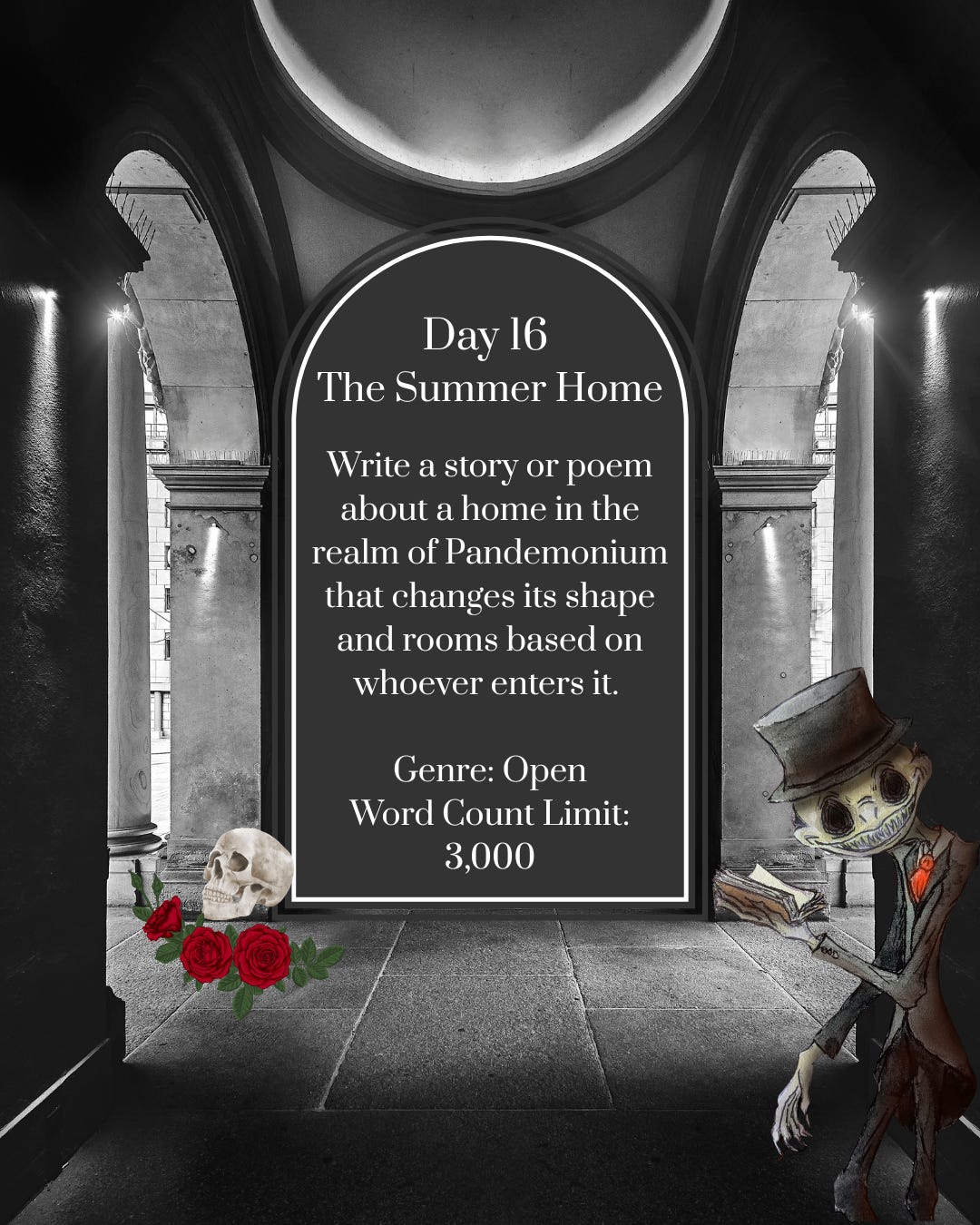
A week passes before the hole in the basement calls me back.
Not literally. Nothing speaks from beneath the plywood covering the opening in my basement. No whispers drift upward through the floorboards at night. Life continues too normally for that. Grocery stores. Traffic. Half-finished conversations with my wife while we fold laundry together in front of the television.
But something changed after my last trip into what I now call “Pandemonium.”
After the tender incident with Claire and the later incident with the jester dolls, I start noticing the way I think. After that, I started noticing how some memories never really go away. They just get quieter.
The thoughts about Natalie came innocently enough. A message from a particularly annoying website saying she had remembered me. I ignored the message.
But Pandemonium, once fed with memories, doesn’t let go of it easily. And by the seventh night, I found myself pulling the plywood off the hole and stepping in. And I find myself exactly where I expected: Natalie’s house.
The garage apartment where she lived when we dated sits twenty yards behind the main house beneath the spread of an enormous live oak; its branches long ago grew outward over the roofline and swallowed most of the yard beneath it in shade. Spanish moss hangs from the limbs in gray uneven curtains that shift softly whenever the night wind moves through them, though the air itself remains thick with humidity enough to feel wet against my skin. The oak roots have pushed through portions of the old concrete driveway years earlier, splitting it upward into crooked ridges half-buried now beneath damp leaves and blown sand.
The apartment was probably once painted a cheery pale yellow with white trim. Time and weather have dragged it into softer, uncertain colors since then. Large sections of the wooden siding have gone pale gray beneath layers of mildew and humidity. Dark water stains spread downward beneath the rusted window frames in long vertical streaks. The screened porch light beside the door glows weakly amber through a shell of dead insects gathered inside the fixture, illuminating only enough of the yard to make the darkness beneath the tree seem deeper by contrast.
I stand at the edge of the driveway longer than I mean to. The place feels smaller than I remember. At sixteen it felt separate from the world entirely, hidden behind the larger house and the hanging moss and the fence line bordering the property behind it. A private little kingdom where two teenagers could pretend adulthood had already begun simply because there was a kitchenette, a big bed, and enough privacy to mistake physical intimacy for emotional permanence.
Now it looks tired. One narrow window glows faintly through yellow curtains gone thin with age. Moisture darkens the lower boards near the foundation. Somewhere nearby water drips steadily from an unseen gutter with slow hollow taps that disappear into the wet grass beneath the oak.
The air smells like Florida after rain. Wet bark. Standing water. The faint mineral smell of cooling pavement. Beneath it lingers something older from the house itself. Dust. Old fabric. The stale electrical scent of appliances left running too long inside enclosed rooms.
I can still remember the first night she brought me here.
Her parents convert the detached garage into a studio apartment before high school because her older brother needed space and then moves out six months later anyway. Natalie inherited it by accident after that. At sixteen it felt impossibly adult to both of us. We spent entire weekends there watching bad horror movies rented from Blockbuster and eventually losing interest in them somewhere around the second act. Half the time the air conditioner barely worked. The television speakers crackled whenever the refrigerator compressor kicked on.
The old television is still visible through the curtains. I notice it only when the curtains shift in a current of air. A pale flicker moves intermittently behind the fabric in soft pulses of blue-white static. The same television. Or close enough to become the same thing inside memory. A large wood-paneled cabinet resting directly on the floor near the far wall. Heavy enough that nobody ever bothered moving it once it settled somewhere.
The screen flickers again. I find myself staring at the window without fully understanding why the sensation crawling slowly through my chest feels wrong. Not fear exactly. Recognition carried too far beyond comfort. The strange emotional vertigo of confronting a place that has continued existing quietly for decades without me inside it.
A shape moves behind the curtain. Not quickly. Someone crossing slowly through the room. Then stillness again. The television continues flickering softly in the dark.
I don’t realize I’m moving toward the apartment until I’m halfway across the driveway.
The wet concrete shifts softly beneath my shoes where the oak roots have pushed through it over the years. Dead leaves cling damply against the edges of the cracks. Somewhere overhead the branches creak faintly in the wind, Spanish moss stirring against itself with a soft dry rustling sound that reminds me unpleasantly of people whispering in another room.
The shape behind the curtain doesn’t appear again. That should probably comfort me. Instead, it leaves the place feeling occupied in a way that would almost be easier if I could see someone clearly moving inside it. The weak porch light throws long amber shadows across the warped boards of the small front stoop. Moisture beads along the aluminum screen door in tiny reflective droplets that catch the light whenever the branches overhead shift.
I stop at the threshold. Up close, the apartment looks older than the memory attached to it. Not abandoned exactly. Just worn down by time in the quiet way Florida wears things down. Humidity swells the wood around the windows. Rust blooms softly outward beneath old screws and hinges. The screen door hangs slightly crooked in its frame now, one corner lower than the other from decades of opening and closing.
The television flickers again inside. For a moment the pale static glow illuminates part of the room behind the curtains. I catch fragmented pieces of it through the thin yellow fabric. The edge of the folding card table near the kitchenette. Part of the bed against the far wall. The silhouette of the console television itself sitting low and square in the corner exactly where it always sat.
Then the light shifts again and the room disappears back into shadow. I can suddenly remember the sound the old screen door used to make when she opened it. The spring never worked correctly. It snapped harder than it should the last few inches before closing, loud enough that her parents in the main house used to complain about it late at night when we forgot to ease it shut. The memory lands hard enough that I almost expect the door to open on its own.
Instead, the apartment remains still around me. The television glow pulses softly behind the curtains. Somewhere deeper inside the room something shifts with a small muffled sound I can’t fully place. A blanket moving across fabric maybe. Someone adjusting position in a chair.
I raise my hand toward the door before fully deciding to. The screen feels damp beneath my knuckles when I touch it lightly. The metal frame rattles softly against the warped wood around it. No voice answers from inside. No footsteps approach.
Just the television continuing to flicker softly in the dark. I pull the door open.
The old spring groans immediately. The sound cuts through the night with aching familiarity before snapping the rest of the way outward hard enough to shake the loose frame in its hinges. Warm air spills slowly from the apartment around me carrying the accumulated smell of old lived-in spaces sealed too long against humidity and time.
The room beyond looks almost exactly the way memory preserved it.
Almost.
The kitchenette still occupies the left corner beneath yellowing cabinets swollen slightly from moisture. The folding card table remains near the center of the room beneath a hanging light fixture whose weak amber bulb leaves most of the apartment submerged in softer shadow. The bed still rests against the wall opposite the old console television, blankets piled unevenly across one end exactly the way she used to leave them.
But time has settled over everything. The wallpaper near the kitchenette peels slightly at the seams now. Water stains spread faintly across portions of the ceiling above the window air conditioner. The carpet beneath my shoes feels damp in places despite the low constant hum of the unit struggling against the Florida heat.
And in the corner, the television continues playing silently to itself. The pale static glow pulses across the room in uneven washes of blue-white light. At first I can’t fully make out the image beneath the distortion. Movement flickers across the curved glass screen in blurred intermittent shapes broken apart by tracking lines and static interference.
Then the image stabilizes for half a second.
It’s my car.
The old yellow 1986 Dodge Caravan, sits beneath a streetlight outside the apartment exactly the way it looked the night we broke up.
The screen crackles softly. Inside the car, two teenagers sit facing each other in the dark. The image wavers beneath a layer of static before sharpening slightly again. I recognize the angle immediately. The apartment window. Someone had left the curtains partially open that night and the television is replaying the scene from inside the room itself, watching us through the rain-speckled glass like the apartment had been remembering all along.
The two figures inside the van sit unmoving for several seconds. Younger versions of ourselves suspended in the strange terrible stillness that always exists right before somebody changes a life without fully understanding they’re doing it. The dashboard glows weak green between us. Rainwater crawls slowly down the windshield in distorted silver lines beneath the streetlight overhead. I can’t hear the words through the static, but I remember them anyway. Or enough of them. The vague shape of cowardice disguised as honesty. The kind of conversation teenagers mistake for emotional maturity because they haven’t yet learned how permanent certain sentences can become.
Then movement. The younger version of me leans forward first.
For a moment I think he’s kissing her. The angle obscures it just enough that the gesture remains ambiguous beneath the flickering static. But then I realize he’s hugging her across the center console instead. Holding on too long because he already understands what he’s about to destroy and wants forgiveness before earning it.
She folds into him immediately. The television crackles softly. Her shoulders begin shaking almost at once.
Even through the distortion I can see the way she tries to hold herself together at first. One hand gripping my arm, her face pressed against my shoulder hard enough to disappear from view entirely. Then the composure breaks somewhere inside her all at once.
I hear her this time. Not clearly. The words arrive muffled beneath static and speaker hum, softened by old failing electronics and decades of replay, but still recognizable enough to reach me.
“No...”
The screen flickers.
“No, why?”
The younger version of me says something back that the television swallows completely beneath a burst of white noise. Natalie pulls away from him then, wiping hard at her face before shoving the passenger door open into the rain.
I feel the vertigo hit me before I fully understand why. Because outside the apartment window behind the television version of her, I can see the porch light glowing softly through the rain.
The same porch light still burning outside behind me now.
The younger Natalie runs through the yard toward the apartment with one arm wrapped tightly around herself against the storm. Her shoes splash through standing water gathered in the low places near the oak roots. She reaches the stoop. Fumbles briefly with the screen door.
Then she disappears inside the same room I’m standing in.
The television continues flickering softly in the corner, then begins to replay the scene.
And somewhere deeper in the apartment, beyond the weak amber light and the low electrical hum of the air conditioner, I hear someone moving around.
I turn toward the sound instinctively. The apartment is small enough that there aren’t many places for someone to be hidden inside it, but the shadows around the kitchenette deepen strangely beyond the reach of the hanging light. For a moment I see nothing except the soft amber glow reflecting off warped cabinet doors and the pale blue static pulsing across the room from the television.
Then the television flickers again and the light shifts just enough for me to see her.
She sits at a small desk pushed against the wall near the door, partially hidden beneath the shadow of the hanging cabinets. I don’t know how I missed her when I walked in. Maybe I didn’t. Maybe Pandemonium simply reveals things when it decides you’re ready to see them.
She’s older. My age now, but not in the exaggerated way memory imagines age when you haven’t seen someone in decades. Just real. Softer around the face. Strands of gray threaded faintly through dark hair pulled loosely back from her shoulders. Reading glasses rest low against her nose while the glow from an open laptop washes pale light across her face.
Unmistakably Natalie.
She doesn’t acknowledge me. She doesn’t even seem aware I’m standing there.
The television continues replaying the breakup softly behind me while she scrolls absently through Instagram with the tired half-focus of someone passing time at the end of a long night. The apartment hums quietly around her. Air conditioner rattling, the refrigerator compressor kicking on somewhere behind the kitchenette. Rain tapping softly against the windows near the bed.
For several seconds I simply stand there watching her exist.
Then the screen of the laptop shifts. A photograph fills it briefly. Me standing barefoot on a beach in Mexico beneath hard white sunlight, straw hat pulled low against the glare while turquoise water rolls in behind me. I’m older now. Broader through the stomach than I was at sixteen. Hair thinner at the temples. But still recognizably myself beneath the decades. My wife took that picture last year during a cruise stop outside Cozumel. I remember complaining about the heat five minutes afterward while carrying overpriced drinks back toward the chairs.
Natalie pauses on it a second longer than the others. Not sadness, or yearning, but a recognition people reserve for faces once mapped intimately into the architecture of their lives.
Her fingers move against the trackpad again.
The photographs continue sliding upward beneath the glow of the screen. Las Vegas. Neon reflecting across wet pavement outside casinos along the Strip. My wife laughing into the camera somewhere beneath the massive gold lights downtown. Then photographs from inside the Sphere during the U2 concert, impossible colors washing across the curved interior behind us while thousands of phones glow through the dark like stars.
A little farther down, our wedding photos. My wife in white beneath artificial Venetian ceilings inside one of those absurd Vegas chapels. Me beside her looking simultaneously overwhelmed and deeply happy in the awkward sincere way middle-aged men sometimes do when life surprises them by working out differently than they expected.
The television crackles softly behind us.
“No, why?”
Natalie scrolls past it. Another cruise. St. Maarten this time. My son older now, almost fully grown, standing beside the railing with sunglasses pushed up into his hair while the ocean stretches endlessly behind him. Family photographs. Restaurants. Christmas mornings. Random snapshots taken absentmindedly over years, the kind of ordinary photographs people take without realizing they’re archiving themselves.
Philadelphia. Paris. Big Ben rising gray against overcast London sky. Narrow streets somewhere in Italy. My wife photographing me in Tuscany while I sit beneath a vineyard awning holding a glass of wine and squinting against late afternoon sunlight.
Natalie stops there.
The television continues replaying the breakup behind her in soft intermittent pulses of static and rain.
Onscreen, sixteen-year-old Natalie cries against my shoulder beneath the weak green glow of the dashboard while older Natalie quietly studies a photograph of the life that came afterward.
Her fingers rest motionless against the laptop for several long seconds before she scrolls again.
Disney with my son years earlier when he was still small enough to sit on my shoulders during fireworks. Pictures from my first marriage. My ex-wife smiling beside me in photographs old enough now to carry their own layer of emotional distance. Another wedding. Other houses, other apartments. Other versions of myself moving slowly back through a couple decades of life.
The apartment remains quiet except for the soft crackle of the television endlessly replaying the night we thought heartbreak was the end of something instead of simply one more room life eventually carries forward with it.
The television image distorts abruptly. The breakup dissolves beneath a violent wash of static that rolls across the curved glass in dense gray bands. The younger versions of us vanish completely beneath the interference. For a few seconds the screen shows nothing except flickering white noise and warped horizontal tracking lines crawling slowly upward through the picture.
Natalie barely reacts. Her eyes remain fixed on the laptop while she moves the cursor toward the sidebar almost absently, the way people navigate familiar corners of the internet without fully thinking about the movement anymore. She clicks another profile.
The photographs change. Now it’s her life unfolding upward across the screen in soft digital squares. Boat rides along the St. Johns River beneath bruised Florida sunsets. Wind pulling loose strands of hair across her face while somebody farther back in the boat laughs at something outside the frame. Beach trips. Folding chairs planted in white sand. Coolers. Sunburned shoulders. Children running half-blurred through surf beneath pale summer light.
The television crackles again behind us. The static clears just long enough for another image to emerge.
Not the breakup this time. A younger Natalie stands beside one of the old river boats smiling into a disposable camera somewhere in the mid-nineties. The colors on the television screen look softer there. Faded slightly toward amber in the way old photographs always seem to age even before they physically deteriorate.
On the laptop she scrolls farther. St. Augustine. Cobblestone streets. The fort. One child small enough to still hold her hand while another leans against the railing behind them trying to look older than he probably is. Christmas mornings. School graduations. Cookouts. Ordinary years accumulating quietly enough that no individual photograph seems important by itself until they begin stacking together into the shape of an entire existence.
But I still see it, I see it in the distortions. That break-up scene, it flashes like a subliminal message through each image.
The television follows her deeper into the past. Now the old CRT shows grainy home-video versions of the same memories flickering softly through static haze. Birthday candles somewhere around 1994. One of the kids opening presents beside a plastic-covered couch. Natalie younger again, hair bigger now, laughing while somebody behind the camera says her name.
As the years roll backward across the screen, the apartment begins feeling less like a room and more like accumulated time.
Natalie continues scrolling. The years peel backward across the screen in uneven increments. Late nineties becoming mid-nineties. Children smaller now. Different apartments. Different cars parked in driveways behind family photographs. Fashion changing slowly enough to only become visible in retrospect.
And all the while the television keeps reaching backward with her, pulling older versions of her life up from somewhere inside the apartment walls themselves, phasing more and more rapidly to that breakup scene. The phasing grows stronger the farther back she scrolls. At first it only appears intermittently beneath the distortion rolling across the old CRT glass. A flicker of dashboard light surfacing briefly beneath Christmas mornings and beach trips before dissolving again into static. The breakup scene no longer overtakes the other memories completely. Instead it bleeds through them in fragments, woven quietly into the visual texture of everything that came afterward.
Natalie at the beach with friends beneath hard Florida sunlight. A burst of static ripples across the screen and suddenly the weak green glow from the van dashboard pulses faintly beneath the surf before disappearing again. Another photograph rises across the laptop screen. Birthday candles. Wrapping paper scattered across a carpet. The television answers with rainwater crawling down windshield glass in distorted silver lines. The images overlap for half-seconds at a time, blending together so naturally that eventually I stop experiencing them as interruptions at all.
The television crackles harder. Static rolls violently across the curved glass now, horizontal bands tearing through the picture quickly enough that the images begin collapsing into each other entirely. Sixteen-year-old Natalie crying against my shoulder. Children opening Christmas presents. Boat rides on the St. Johns beneath orange evening light. My younger self leaning across the center console of the van while somewhere behind the distortion somebody blows out birthday candles twenty years later.
Then suddenly the television stabilizes.
I look over just as the image sharpens into a grainy photograph washed soft with disposable-camera color bleed and age.
Graduation.
My graduation.
I stop breathing for a second because I have never seen this picture before in my life. I’m standing in cap and gown beneath the soft glow of the Florida Theater lights with my diploma tucked awkwardly beneath one arm while students blur indistinctly behind me in folding chairs. The image quality is terrible. The colors faded slightly amber with time. But it’s unmistakably me.
And she took the photograph. The realization settles into me slowly enough to hurt. Because I never knew she was there that night. I never saw her in the crowd. Never looked for her. By then the breakup already belonged to the past, a year by that point, in the careless way teenagers categorize emotional devastation once enough weeks have passed and ordinary life starts moving again.
But she had been there anyway. The television flickers softly and the breakup scene phases faintly beneath the graduation image now. Rain against windshield glass. Her crying quietly into my shoulder while another version of me several years later smiles awkwardly into a camera lens without realizing who stands behind it.
I stare at the screen while the understanding finally settles fully into place. The breakup stayed with her. Not as some great tragedy. Just... part of those years.
Parts of how she remembered becoming herself, interwoven quietly into graduations and birthdays and marriages and children and all the ordinary years that followed afterward. The kind of memory that surfaces unexpectedly when certain songs play late at night or when an old face appears briefly on a screen after decades apart.
The television sharpens one final time. And there, barely visible near the edge of the frame beneath the theater lights, I can see Natalie sitting three rows behind the class watching me accept my diploma with an expression so soft and complicated that even now I cannot fully name it.
Natalie continues staring at the graduation photograph for several quiet seconds before the screen dims slightly beneath inactivity. The television hums softly in the corner. Rain still falls outside somewhere beyond the apartment walls, tapping against the old window unit and the live oak leaves overhead in soft uneven rhythms that make the room feel smaller and more insulated from the world beyond it.
Then, almost absently, she closes the laptop. The room darkens immediately without the pale glow from the screen washing across her face. For a moment the television becomes the primary source of light again, blue-white static flickering softly across the walls while younger versions of ourselves continue repeating the same impossible conversation inside the van beneath the rain.
Natalie removes her glasses slowly and rubs at one eye. She looks older suddenly in the softer light. Not diminished or sad, she looks tired in the familiar way people our age look tired now.
Then she stands. The apartment shifts around the movement. Floorboards creak softly beneath her bare feet while she crosses the room toward the bed near the far wall. The television flickers again behind her, briefly illuminating sixteen-year-old Natalie crying against my shoulder while older Natalie pulls back the blanket and slides quietly beneath it beside a man already asleep.
He barely stirs. One arm moves instinctively across her waist without fully waking, practiced enough to happen automatically after years together. Natalie settles against him with the unconscious ease of long familiarity, her body finding the shape of his without hesitation. Within seconds the tension leaves her shoulders entirely.
The television continues replaying the breakup softly in the corner. But then, that fades to a black screen too.
I turn and walk back toward the door. The old screen spring groans softly behind me when I step out onto the stoop again. Humid night air settles immediately across my skin, the live oak shifts overhead in the wind, Spanish moss stirring softly against itself while water drips somewhere unseen into the wet grass below.
Behind me, through the thin yellow curtains, the television flickers again. I don’t look back because I understand it differently now.
A person can be happily married, fulfilled, deeply in love with someone else, and still feel that small ache seeing the face of someone who once mattered profoundly when they were sixteen.
Some people leave residue behind.
This is a response to day 16 of Bradley Ramsey’s “Halls of Pandemonium” writing event. Although I’m not participating in the scoring portion of the event (you know, since I, uh… wrote the backend for it), likes, comments and restacks will (maybe) help us achieve community goals and spread the word about the challenge.
I love the resolution!
Brill. Love it!!!😍😍😍😍